District heating - Solör Bioenergi
  • For a sustainable society

    District heating is a common form of heating. The heat is produced centrally at a heating plant and distributed as hot water through underground pipes to buildings in the area, where a compact district heating unit provides heat for both radiators and tap water.

    At Solör Bioenergi, most of the heat is produced from local, renewable residues from the forestry industry, such as wood chips, bark and sawdust from forestry operations and sawmills.

What is district heating?

District heating is one of the most common forms of heating in Sweden. The heat is produced centrally at a heating plant and distributed as hot water through underground pipes to buildings in the area, where a compact district heating unit provides heat for both radiators and tap water. No individual boiler, no fuel to refill and no chimney sweeping.

At Solör Bioenergi, most of the heat is produced from local, renewable residues from the forestry industry, such as wood chips, bark and sawdust from forestry operations and sawmills. Here, we explain how district heating works, what it costs and how the connection process works.

How district heating works

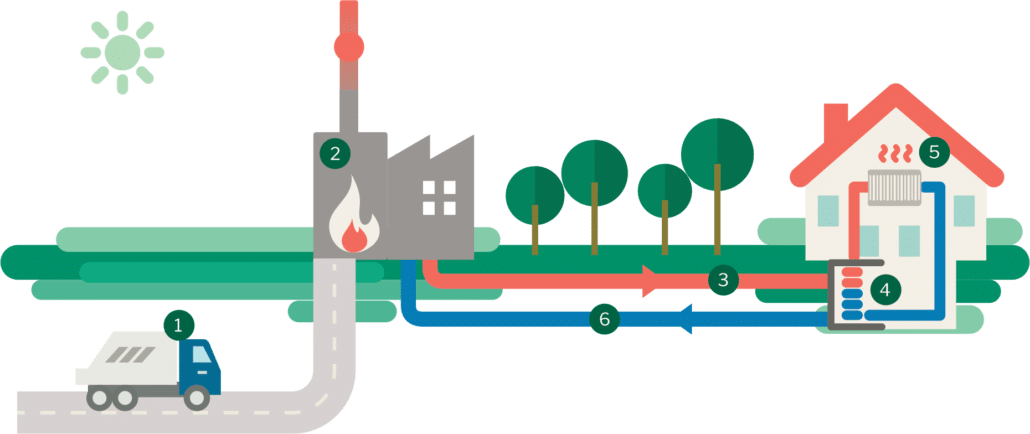
The fuel is delivered

Biofuel is transported to our heating plants, mainly residues from the forestry industry such as wood chips and bark, as well as recycled wood. By using materials that might otherwise go to waste, we make use of existing resources and produce heat for homes, businesses and communities.

This is where the heat is produced

At the heating plant, the biofuel is combusted and the energy is used to heat water to approximately 80–120°C. In some locations, we also make use of excess heat from local industries. The heated water is then distributed through the district heating network. At some heating plants, electricity is also produced at the same time as district heating, known as combined heat and power.

The heat is transported to the building

The hot water is pumped from the heating plant through a network of well-insulated pipes buried beneath streets and roads. Smaller pipes branch off from the main network to each connected property. Thanks to the insulation, heat can be transported over long distances with relatively low heat losses.

A warm and comfortable home

With district heating, the property maintains an even and comfortable indoor temperature and has access to hot water whenever needed. The district heating unit automatically adjusts the heat according to the building’s needs and the outdoor temperature.

Ett varmt och skönt hem

Med fjärrvärme får fastigheten en jämn och behaglig inomhustemperatur och tillgång till varmt vatten när det behövs. Fjärrvärmecentralen anpassar automatiskt värmen efter husets behov och temperaturen utomhus.

The water is reused

Once the district heating water has transferred its heat in the property’s district heating unit, it has cooled down. Without mixing with the water in the building’s own system, it is returned to the heating plant through a separate return pipe. There, it is reheated before being distributed to the properties again.

Why choose Solör Bioenergi

We manage the entire value chain, from purchasing biofuel from local forest owners to producing and delivering the heat. This gives us a strong local presence, with people on the ground who know the network, round-the-clock operational monitoring all year round, and heat that is largely produced from renewable residues from forestry.

© Copyright 2026 – Solör Bioenergi

About Cookies